Posts

Look at how drop in fossils fuel emissions from coronavirus response changed earth's atmosphere from Mar - Apr

Image
Computer based models and datasets  and sensors located  on our planet's surface that continuously monitor the environment , allowing scientists to observe  the growing effects of the pandemic. NASA has started up brand new projects to specifically track and study how covid-19 is changing our planet's atmosphere.  To study these changes, researchers are working with data  from instrument including OMI, a Dutch Finnish instrument aboard NASA Aura satellite and the TROPOMI on the ESA sentinel-5p satellite. Since the earlier days of the pandemic,satellites have been showing changes in nitrogen dioxide levels and significant changes spotted over countries like Italy and China. Joanna joiner and Bryan Duncan, researchers at NASA Goddard space flights center in Maryland, have been using OMI's data, to continue to took new and better comparisms to show how gases in Earth's atmosphere are changing.  While all NASA employees whose work is...
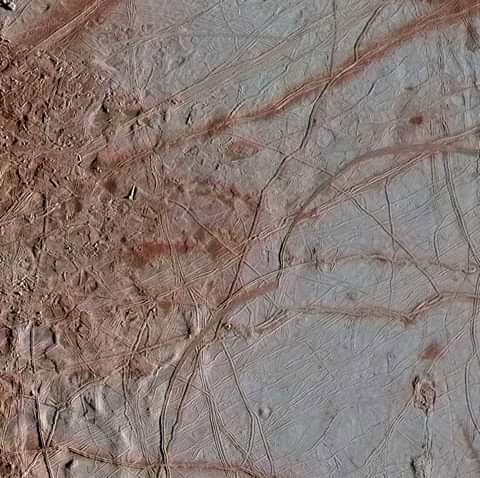
Images shows chaotic detail of Jupiter icy moon Europa

Image
Thanks to decade old images from an old Spacecraft scientist have gotten best view to date at the three chaotic patches on the surface of Jupiter's icy moon Europa. NASA Galileo Spacecraft from (1995 - 2003) spent 8 years touring Jupiter and it made 11 flybys of Europa. Galileo captured a particularly detailed black and white images of Europa surface on Sept 26, 1998. Europa Clipper Mission is a new NASA mission which is targeted to launch in 2023 or 2025, it will study Europa thiny atmosphere, icy surface, hypothesized ocean surface and internal magnetic field which will scientist their first look of Europa since Galileo mission. While preparing for the new mission, scientists are trying to squeeze all data they can out of Galileo and thats where their processed image come in. In 1998, Galileo was able to captured images which showed the moon surface at just 1,500 feet. Such detail is important because it out there is a lot going on at Europa surf...

Astronomers find the nearest known blackhole to earth.

Image
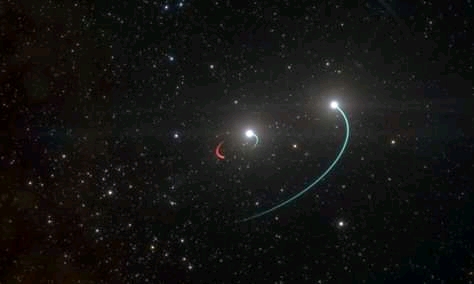
Astronomers have discovered a blackhole closer to earth than any found before. Located about 1,000 light years away in the southern constellation Telescopium, the blackholeweighs in at some four times the mass of our sun, which means it is only 7.5 miles wide. Researchers found the blackhole while tracking binary stars using telescope at the latest silla observatory in Chile. When they take a closer look at the star system HR 6819, they noted that the inner star orbits quickly while the outer star orbits slowly along. This meant the star are not just circling each other, some unseen third object has to be located near the center. The hidden object and the inner star dance around each other every 40 days. Meanwhile, astronomers says the invisible object is at least four times the mass of the sun, so it can only be a blackhole. Finding a quiet blackhole that is not actively devouring a neighbor is dkffivdif because blackhole try not to betray themselves, but even with...

The Solar Winds Hitting Earth Are More Hotter Than Before, And We May Finally Know Why.

Image
   Our planet is constantly bathed in the winds coming off the sphere at the center of our solar system. But even though our sun itself is so ridiculously hot, once the solar reached earth, they are usually hotter than they should be and we might actually know why. The particles making up the plasma of the sun's heliosphere cool as they spread out. The problem is that they take their time doing so, dropping in temperature for slower than models predict. But there are many important properties of this plasma which are still not well understood, says physicist stas Boldyrev from the University of Wisconsin in Madison. Initially, researchers thought the solar wind has to cool down very rapidly as it expand from the sun, but satellites measurements shows that as it reaches the earth, its temperature is 10 time larger than expected. The expansion process itself has long been assumed to be subjected to adiabatic law, a term that simply means heat energy isn't added or...

Telescope image shows remains of comet ATLAS.

Image
Many skywatchers had high hope that comet ATLAS would light up the light sky this spring, instead, the icy objects crumbled inti pieces. An astronomer at the University of Maryland, ye Quanzhi, take a look at comet ATLAS on Monday, April 20 using NASA's Hubble Space Telescope, he caught a stunning image of its fragment. Ye hopes those mini-comets will help scientists understand what caused ATLAS to fall apart. in particular, astronomers rely on the distance between fragments to reconstruct events, since that distance increase as more time passes since a specific fracture. In the Hubble image, ye said he believes two of those fragments have broken down even more, yielding the two pairs of bright spot on the right which represents the four largest fragments at the time. Also, the two clouds of brightness on the left may represents where older fragments hach broken up into smaller pieces before beginning the observation, which lasted for one of hubble ...